Zagat graphics
Americans love Sriracha; green juice, not so much.
BY NADINE KAM
Google launched a study in cooperation with Zagat today regarding dining in cities across the United States, including Honolulu, and here are some of the findings on our dining out habits and preferences:
Respondents in Honolulu estimated they eat out (for breakfast, lunch or dinner) approximately 5.8 times a week.
Honolulu residents spend an average of $32.12 per person for a dinner out at a restaurant, tipping approximately 18.5 percent for service. In comparison, the national average per person is $36.30 and average tip is 18.9 percent.
Given Hawaii’s higher cost of living, this came as a surprise to me, but maybe this is how we are compensating for the higher cost of housing.
The No. 1 complaint about dining out is service (30 percent), followed by crowds (17 percent), parking (15 percent), noise (13 percent), and prices (13 percent).
The favorite cuisine of choice for Honolulu diners is Japanese (28 percent), proceeded by American (14 percent), Italian (13 percent), Thai (10 percent), steakhouses (9 percent), and Korean (6 percent). Nationally, Italian is the favorite cuisine.
Although Honolulans tend to eat out frequently, we're not big spenders on a per-visit basis, spending $32.12 per person, when compared to our fellow Americans' expenditure.
More numbers:
— 51 percent of Honolulu residents make reservations by calling the restaurant while just 36% use the Internet.
— 67 percent of Honolulu residents think that using cellphones at the table is OK in moderation, whereas 22 percent believe it is completely unacceptable. Only 7 percent think it is perfectly acceptable.
— 82 percent of Honolulu diners have planned or would plan a getaway to eat at a specific restaurant.
— The top dining deal-breaker in Honolulu is a cash-only policy (45 percent), followed by communal tables (44 percent) and jacket required establishments (40 percent).
— And, 69 percent of Honolulu respondents consider themselves foodies, compared to 40 percent of Americans who think of themselves as foodies.
We’re not the biggest tippers either, ranking close to the bottom with our 18.5 percent average tip.
That is not a shocker, but a pretty high number considering that I speak to many of these self-proclaimed “foodies” who won’t even eat fish and many other basic ingredients, not due to any health or allergy reason, but just … because.
I would say a foodie needs to have a willingness to try all food, which is necessary to form a baseline of culinary experience and flavor profile knowledge. I know people with aversion to onions, for example, who will never understand the alchemy of raw onions in a hamburger, or those who won’t eat cilantro, who can’t appreciate how much it adds to salsa.
You can find a link to the survey at zagat.com/diningtrends, or take a look at this video.
—————
Nadine Kam is Style Editor and staff restaurant critic at the Honolulu Star-Advertiser; her coverage is in print on Wednesdays and Thursdays. Contact her via email at nkam@staradvertiser.com and follow her on Twitter, Instagram and Rebel Mouse.
Showing posts with label Hawaii dining. Show all posts
Tuesday, January 26, 2016
Wednesday, December 23, 2015
Holiday grandeur at Chef Mavro
Nadine Kam photos
Roasted Keahole lobster is on Chef Mavro’s Grand Degustation Menu, and available as a seafood option on the restaurant’s holiday menu. It’s served with housemade choucroute, kabocha confit, grilled Brussels sprout leaves, layered over kabocha and crustacean essence purée. Pairing: Morlet Family Vineyards, 2013 Chardonnay “Ma Douce,” Sonoma coast (premium selection).
BY NADINE KAM
AT Chef Mavro, chef-owner George Mavrothalassitis, chef de cuisine Jonathan Mizukami and their team recently made it to No. 59 on La Liste of Top 101 restaurants in the United States, the only Hawaii restaurant to make the exclusive list.
La Liste is based on an algorithm named Ciacco—the nickname of Dante’s gluttonous friend in “The Inferno”—created by French-American computer systems architect Antoine Ribaut. Ribaut drew on data from sources that included 200 food guides in 92 countries, such as Michelin, Gault & Millau and Zagat, and crowd-sourced sites like TripAdvisor and OpenTable.
A committee of experts helped to define the criteria, including the quality of food, ambience, wine and spirits lists, and service, to come up with La Liste for 48 countries.
If you want to know what the fuss is about, now is a good time to sample Chef Mavro’s fall menu, with all the luxurious touches you’d expect for season of getogethers and entertaining out-of-towners.
I recently revisited to try the fall Grand Degustation menu of 15 courses, including amuse bouche, intermezzo and mignardises. The presentation may differ from the photos, but many of the grand degustation dishes will also appear as options on the chef’s holiday “Art of Pairing Food and Wine” six-course menu, at $148 per person Dec. 23 through Jan. 3 (except for Christmas Eve, Christmas Day and New Year’s Eve). Optional wine pairings are $98 per person. You can view the holiday options, including a New Year’s Eve gala menu online at chefmavro.com.
—————
Chef Mavro is at 1969 King St. at McCully. Call (808) 944-4714.
Meli-Melo salad of Upcountry vegetables of the day, Sumida Farms watercress, escarole, crispy mushroom persillade, grilled Ali'i Mushrooms, essence of mushroom vinaigrette and pinot noir sauce. Pairing: Domaine Zind-Humbrecht, 2012 Alsace blend.
This is a Hudson Valley foie gras parfait, topped with preserved Black Mission fig, pinot noir gelée and Marcona almond purée, served with a side of toasted brioche. Even though I could not finish all of this, I would not let it go, thinking I might get a second wind and finish over the course of the meal. Pairing: Chateau Gravas, 2011 Sauternes.
Marseilles fisherman’s soup is a hometown specialty of Chef Mavro, with onaga, saffron, rouille and aioli-topped crouton. This dish made me want to head to the kitchen to make my own aioli so I could taste this every day. So delicious. Pairing: Domaine Ott, 2014 Bandol Rose, Chateau Romassan.
Juniper berry cured opah belly is served with red beets, pickled Japanese cucumber, dill pudding and a crunchy mixture of crumbled coffee flour rye bread which gave wonderful texture and flavor to the dish. Pairing: Pascal Jolivet, 2014 Sancerre.
Offered on the Grand Degustation menu but not on the holiday menu is chef Mizukami's Egg "Osmose" creation, a poached Peterson Farms egg with white truffle potato declinaison: confit, purée and crispy "pomme Maxim's" with pickled shallots and fresh white truffles shaved tableside. There are so many things going on with this dish that your palate will be wondering, "What's this sensation? What's that?" Your brain will just be thinking, "Yummm!" Pairing: Pio Cesare, 2011 Barolo, Piedmont.
Roasted Keahole lobster is on Chef Mavro’s Grand Degustation Menu, and available as a seafood option on the restaurant’s holiday menu. It’s served with housemade choucroute, kabocha confit, grilled Brussels sprout leaves, layered over kabocha and crustacean essence purée. Pairing: Morlet Family Vineyards, 2013 Chardonnay “Ma Douce,” Sonoma coast (premium selection).
BY NADINE KAM
AT Chef Mavro, chef-owner George Mavrothalassitis, chef de cuisine Jonathan Mizukami and their team recently made it to No. 59 on La Liste of Top 101 restaurants in the United States, the only Hawaii restaurant to make the exclusive list.
La Liste is based on an algorithm named Ciacco—the nickname of Dante’s gluttonous friend in “The Inferno”—created by French-American computer systems architect Antoine Ribaut. Ribaut drew on data from sources that included 200 food guides in 92 countries, such as Michelin, Gault & Millau and Zagat, and crowd-sourced sites like TripAdvisor and OpenTable.
A committee of experts helped to define the criteria, including the quality of food, ambience, wine and spirits lists, and service, to come up with La Liste for 48 countries.
If you want to know what the fuss is about, now is a good time to sample Chef Mavro’s fall menu, with all the luxurious touches you’d expect for season of getogethers and entertaining out-of-towners.
I recently revisited to try the fall Grand Degustation menu of 15 courses, including amuse bouche, intermezzo and mignardises. The presentation may differ from the photos, but many of the grand degustation dishes will also appear as options on the chef’s holiday “Art of Pairing Food and Wine” six-course menu, at $148 per person Dec. 23 through Jan. 3 (except for Christmas Eve, Christmas Day and New Year’s Eve). Optional wine pairings are $98 per person. You can view the holiday options, including a New Year’s Eve gala menu online at chefmavro.com.
—————
Chef Mavro is at 1969 King St. at McCully. Call (808) 944-4714.
Meli-Melo salad of Upcountry vegetables of the day, Sumida Farms watercress, escarole, crispy mushroom persillade, grilled Ali'i Mushrooms, essence of mushroom vinaigrette and pinot noir sauce. Pairing: Domaine Zind-Humbrecht, 2012 Alsace blend.
This is a Hudson Valley foie gras parfait, topped with preserved Black Mission fig, pinot noir gelée and Marcona almond purée, served with a side of toasted brioche. Even though I could not finish all of this, I would not let it go, thinking I might get a second wind and finish over the course of the meal. Pairing: Chateau Gravas, 2011 Sauternes.
Marseilles fisherman’s soup is a hometown specialty of Chef Mavro, with onaga, saffron, rouille and aioli-topped crouton. This dish made me want to head to the kitchen to make my own aioli so I could taste this every day. So delicious. Pairing: Domaine Ott, 2014 Bandol Rose, Chateau Romassan.
Juniper berry cured opah belly is served with red beets, pickled Japanese cucumber, dill pudding and a crunchy mixture of crumbled coffee flour rye bread which gave wonderful texture and flavor to the dish. Pairing: Pascal Jolivet, 2014 Sancerre.
Offered on the Grand Degustation menu but not on the holiday menu is chef Mizukami's Egg "Osmose" creation, a poached Peterson Farms egg with white truffle potato declinaison: confit, purée and crispy "pomme Maxim's" with pickled shallots and fresh white truffles shaved tableside. There are so many things going on with this dish that your palate will be wondering, "What's this sensation? What's that?" Your brain will just be thinking, "Yummm!" Pairing: Pio Cesare, 2011 Barolo, Piedmont.
Thursday, March 17, 2011
Around the world at Kahala
Nadine Kam photos
A view from inside the Plumeria Beach House toward the ocean, al fresco tables and musicians.
The Kahala Hotel & Resorts hosted the second of its "Kahala Restaurants Present: Island Heritage Cuisine" in the Plumeria Beach House on March 12, with an international array of appetizers, salads, entrees and desserts in a buffet reflecting the way various cuisines came together to become island favorites.
The selections are forever linked to Hawaii's history of plantation labor, and the Chinese, Filipino, Hawaiian, Japanese, Korean and Portuguese dishes represent the ethnic backgrounds of executive chef Wayne Hirabayashi and his team of chefs. Although the circumstances of our ancestors were trying, what's left is a remarkable food legacy ingrained in our culture.
The amount and array of food offered was so vast that one has to make a tour of the room and come up with a strategy for making the most of the buffet without overdoing it. For me, it meant starting with dishes that I don't see every day, like salt cod-stuffed Portuguese bread and caldo verde, a delicious soup of chorizo, kale and diced potatoes.
Prawns sinigang with New Caledonia prawns, tamarind, squash and eggplant.
I was also tempted by the Philippines section with its old-style prawns sinigang and braised oxtail kare kare. I think a lot of people are still wary about Filipino cuisine so those dishes were barely touched, but they were among the best dishes available that night. Also amazing to me were the amazingly compact Korea bi bim bap, molded musubi style, so the meat and veggie fillings were inside the crisped rice!
Oxtail kare kare, and below, shrimp paste that accompanied the Filipino dishes.
It added up to an educational experience for some of the visitors there, like a tourist in the Japan section, who, studying the hasu, kabocha and assorted tsukemono, asked of one item, what's that?
"Taro," I said. "What's that?" she asked again.
That's something that doesn't require an explanation for locals.
A noodle bar allowed diners to pick their own ingredients for a stir-fry.
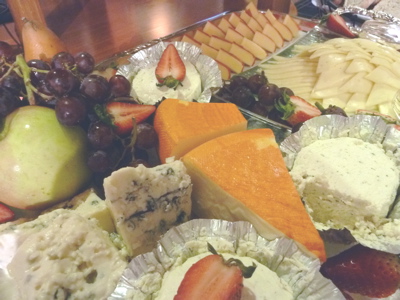
The next event, taking place 6:30 to 10 p.m. April 9 will be themed "Buns and Dumplings," with another selection of dishes from around the world, with staples of salads, raw bar, cheese tray and desserts. The cost is $75 plus tax and 20 percent gratuity per adult, and $37.50 plus tax and 20 percent gratuity per child age 4 to 12.
Hasu, or lotus root, in the Japan section of the buffet.
>>>>><<<<<
Here's what will be on the menu on April 9:
Cold selections: Chinese chicken salad, salmon tofu salad, Waimanalo greens, chopped romaine, tomato mozzarella, domestic and imported cheese platter.
Raw bar: Assorted nigiri sushi; California, spicy ahi, unagi and maki rolls; inari sushi; ahi sashimi; ahi, tako and mussel poke; oysters, crab claws and shrimp on ice.
Buns and dumplings: Vegetable Samosas, fried masa bun with pulled beef cheeks, kalua pig paroshki, duck and mochi rice dumpling with Asian gremolata, imperial scallop soup buns, har gau and vegetarian pot stickers.
Hot pans: Black truffle gnocchi, chicken and dumplings, monk fish dumplings in consommé, and grilled catch with mochi rice lup cheong dumplings.
Carving station: Prime rib of beef au jus with horseradish buns, roast duck and roast pork with buns, and lemon-bacon roast chicken with rosemary buns.
Desserts: Seasonal whole and sliced fruits, ube and coconut ice cream sandwiches, pineapple turnovers, apricot “ravioli” cookies, blueberry panna cotta, chocolate dobash Cake, haupia cake, strawberry Napoleons, Kona coffee profiteroles, stuffed marshmallows, brownies and blondies, and bun pudding with crème Anglaise.
Desserts available March 12 included the resort's specialty Kahalasadas with lilikoi sugar, and above, Portuguese custard cream, chocolate and matcha green tea torte.
Chocolate fans were delighted by jasmine tea-infused pots de creme.
Fixings for halo halo included tapioca pearls, ube, toasted coconut, red beans and cantaloupe.
Fresh fruit was pretty enough to lure those that might normally choose more sinful desserts.
A view from inside the Plumeria Beach House toward the ocean, al fresco tables and musicians.
The Kahala Hotel & Resorts hosted the second of its "Kahala Restaurants Present: Island Heritage Cuisine" in the Plumeria Beach House on March 12, with an international array of appetizers, salads, entrees and desserts in a buffet reflecting the way various cuisines came together to become island favorites.
The selections are forever linked to Hawaii's history of plantation labor, and the Chinese, Filipino, Hawaiian, Japanese, Korean and Portuguese dishes represent the ethnic backgrounds of executive chef Wayne Hirabayashi and his team of chefs. Although the circumstances of our ancestors were trying, what's left is a remarkable food legacy ingrained in our culture.
The amount and array of food offered was so vast that one has to make a tour of the room and come up with a strategy for making the most of the buffet without overdoing it. For me, it meant starting with dishes that I don't see every day, like salt cod-stuffed Portuguese bread and caldo verde, a delicious soup of chorizo, kale and diced potatoes.
Prawns sinigang with New Caledonia prawns, tamarind, squash and eggplant.
I was also tempted by the Philippines section with its old-style prawns sinigang and braised oxtail kare kare. I think a lot of people are still wary about Filipino cuisine so those dishes were barely touched, but they were among the best dishes available that night. Also amazing to me were the amazingly compact Korea bi bim bap, molded musubi style, so the meat and veggie fillings were inside the crisped rice!
Oxtail kare kare, and below, shrimp paste that accompanied the Filipino dishes.
It added up to an educational experience for some of the visitors there, like a tourist in the Japan section, who, studying the hasu, kabocha and assorted tsukemono, asked of one item, what's that?
"Taro," I said. "What's that?" she asked again.
That's something that doesn't require an explanation for locals.
A noodle bar allowed diners to pick their own ingredients for a stir-fry.
The next event, taking place 6:30 to 10 p.m. April 9 will be themed "Buns and Dumplings," with another selection of dishes from around the world, with staples of salads, raw bar, cheese tray and desserts. The cost is $75 plus tax and 20 percent gratuity per adult, and $37.50 plus tax and 20 percent gratuity per child age 4 to 12.
Hasu, or lotus root, in the Japan section of the buffet.
>>>>><<<<<
Here's what will be on the menu on April 9:
Cold selections: Chinese chicken salad, salmon tofu salad, Waimanalo greens, chopped romaine, tomato mozzarella, domestic and imported cheese platter.
Raw bar: Assorted nigiri sushi; California, spicy ahi, unagi and maki rolls; inari sushi; ahi sashimi; ahi, tako and mussel poke; oysters, crab claws and shrimp on ice.
Buns and dumplings: Vegetable Samosas, fried masa bun with pulled beef cheeks, kalua pig paroshki, duck and mochi rice dumpling with Asian gremolata, imperial scallop soup buns, har gau and vegetarian pot stickers.
Hot pans: Black truffle gnocchi, chicken and dumplings, monk fish dumplings in consommé, and grilled catch with mochi rice lup cheong dumplings.
Carving station: Prime rib of beef au jus with horseradish buns, roast duck and roast pork with buns, and lemon-bacon roast chicken with rosemary buns.
Desserts: Seasonal whole and sliced fruits, ube and coconut ice cream sandwiches, pineapple turnovers, apricot “ravioli” cookies, blueberry panna cotta, chocolate dobash Cake, haupia cake, strawberry Napoleons, Kona coffee profiteroles, stuffed marshmallows, brownies and blondies, and bun pudding with crème Anglaise.
Desserts available March 12 included the resort's specialty Kahalasadas with lilikoi sugar, and above, Portuguese custard cream, chocolate and matcha green tea torte.
Chocolate fans were delighted by jasmine tea-infused pots de creme.
Fixings for halo halo included tapioca pearls, ube, toasted coconut, red beans and cantaloupe.
Fresh fruit was pretty enough to lure those that might normally choose more sinful desserts.
Subscribe to:
Posts (Atom)